
Email marketing for local businesses sounds like something a software company does, not a dentist, an interior contractor or a two-branch gym. The reputation is deserved: most small business email is a monthly newsletter nobody opens, sent to a list collected at a trade show three years ago. That is not what this is. This is the shortest path back to a customer who already raised their hand, at a cost close to zero.


The reason it matters is arithmetic. A local business pays for a click, answers a form, quotes a job, and then most of those enquiries go quiet. Some are not ready, some are comparing, some simply got busy. Without a follow-up the only one who hears from them again is whichever competitor keeps calling. An email list is the cheapest way to stay in that conversation without hiring anyone.
What email marketing for local businesses is actually for
It is not for broadcasting. It is for the two moments a sale is most likely: right after someone gets in touch, and right before they have forgotten you.
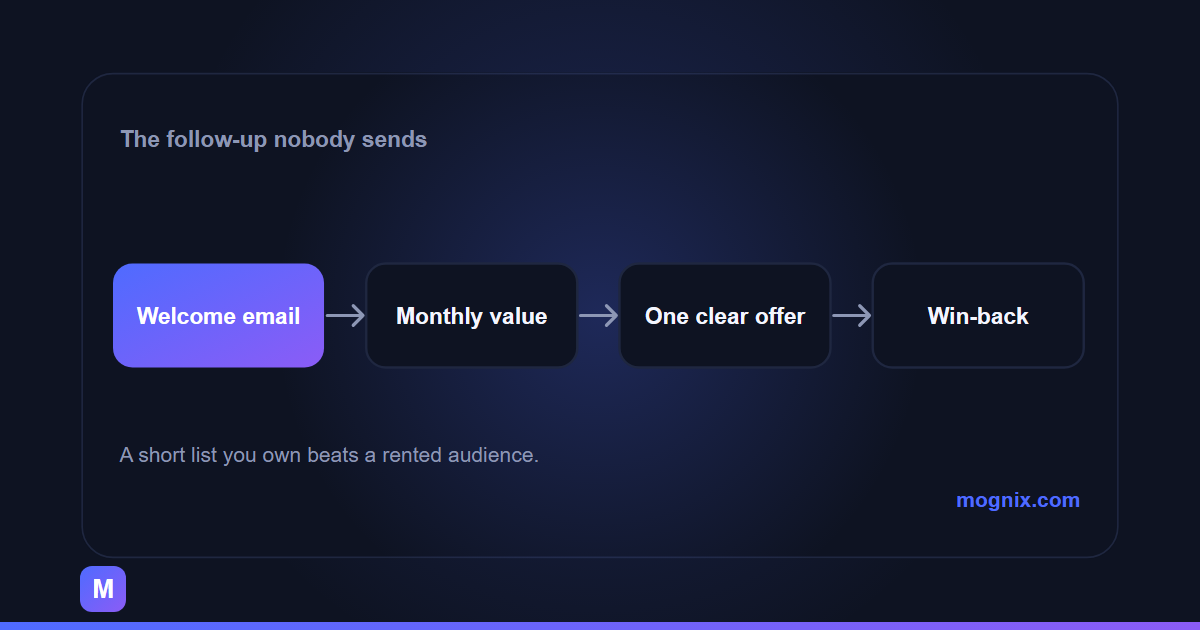
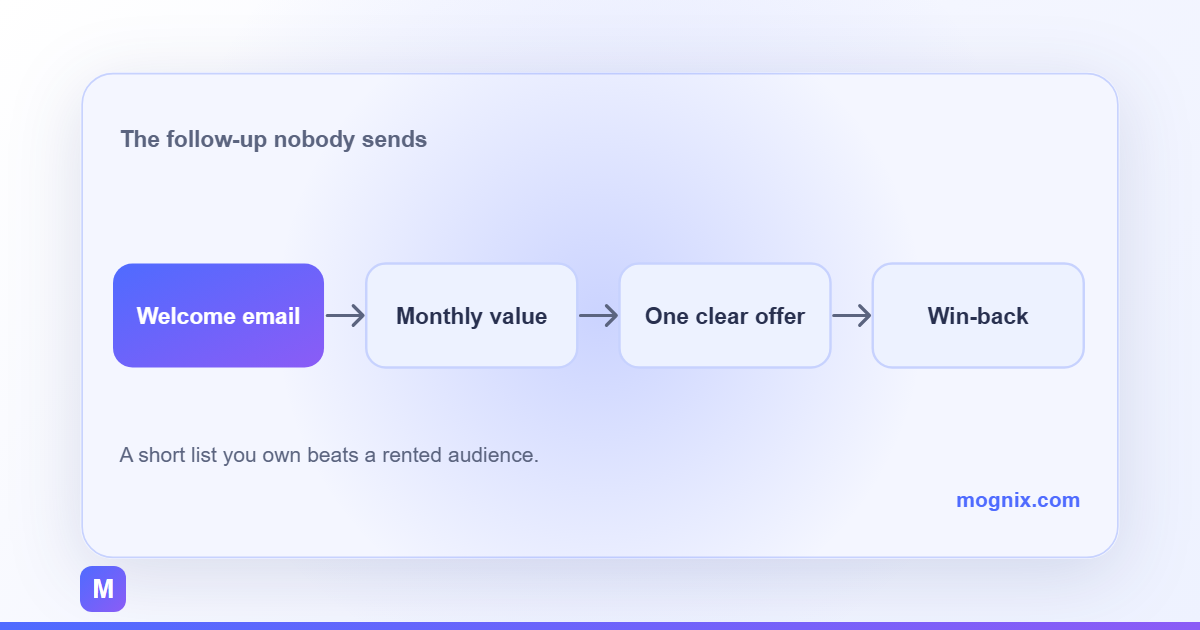
The welcome sequence
When someone enquires, they expect a reply from a human within hours. What they do not expect is a short, useful message the next morning that answers the question they were too polite to ask. That message is the highest-value email a local business can send, because the person is still in the market and has just been reminded who you are.
A simple sequence is three messages over ten days. The first is the answer and the next step. The second handles the objection that stops most people, which is usually price or timing, with a real example rather than a claim. The third is a soft close with a specific offer and a date. After that, stop. A fourth message that says nothing new trains people to ignore the sender.
The monthly message worth opening
One useful email a month beats four promotional ones. Useful means local and specific: what the weather or the season means for the work, a mistake customers make in the category, a price change explained before it happens, a project with the numbers attached. A Kolkata business writing about the monsoon and waterproofing is more relevant than any generic newsletter, because it can only have been written by someone in that market.
The test is whether a customer would forward it to a neighbour. If not, it is an advertisement with a subject line, and those get filed accordingly.
The win-back that is not desperate
Past customers are the cheapest audience a local business has, and most businesses never speak to them again. Two messages a year are enough: one that reminds them of the maintenance or renewal they will need, and one that offers a genuine reason to return. The second can be a discount. The first is more valuable, because it arrives as advice rather than as a sale.
Building the list without buying one
A purchased list is not a shortcut; it is a liability. It has no relationship behind it, it usually breaches the consent rules that apply where the recipient lives, and the first campaign can damage the domain that your enquiry notifications depend on.
Consent has to be visible
Collect addresses where the work happens: at the end of a quote, on the contact form with a clear opt-in line, at the counter with a card, on the invoice with a link. The wording should say what the person will receive and how often, and it should be optional. In most jurisdictions a pre-ticked box is not consent, and an existing customer relationship covers only closely related messages. India’s Digital Personal Data Protection Act and the equivalent rules elsewhere put the burden on the sender, so make the permission easy to prove and easy to withdraw.
Make the first ask small
A single useful thing converts better than “subscribe to our newsletter”. A checklist, a price guide, a maintenance calendar, a short video showing what to expect on installation day. The value is in removing uncertainty, which is what a local buyer is actually paying for.
Keep the list clean
Bounces and non-openers cost deliverability. Prune addresses that have not opened anything in a year, and always honour an unsubscribe within a day rather than keeping the address in a hidden column. A list of 400 engaged local addresses will outperform 4,000 collected from a rented file, and it will keep your enquiry emails out of spam.
Sending something that gets read
Most of the result is decided before the email is opened, and most of what is left is decided by the first two lines.
Subject lines that sound like a person
Short, specific and free of urgency theatre. “Your quote and two things to check” beats “Don’t miss out!” every time, because the first describes something the reader wants and the second describes something the sender wants. Avoid emoji in the subject for a local service business; the sender name is the trust signal, not the decoration.
One message, one action
A local email usually asks for one of three things: reply, call, or book. Pick one per email and make it a single button or a single sentence. Two calls to action halve the response to each, and a page of links sends people to the website instead of to the reply button.
Plain text is not a downgrade
A short message in plain text, from a real address, with a real signature, often outperforms a designed template. Templates are worth the effort for a monthly piece or a promotion, not for a follow-up that should feel like it came from the person who did the quote.
How to tell whether it works
Track three numbers and ignore the rest: replies, bookings and revenue attributed to the list. Open rates are a proxy at best, distorted by image blocking and privacy features, and click rates on a follow-up are naturally low because the action is a reply, not a click.
The one comparison worth running is against no email at all. Take last quarter’s enquiries that went quiet and ask how many were ever contacted again. Then compare close rates for enquiries that received the three-message sequence. For most local businesses the gap is the entire business case.
If the list is small, start with the welcome sequence only and send it to everyone who enquires from next week. That single change usually pays for the whole effort, and it takes an afternoon to set up.
The list also compounds with the rest of the funnel. Traffic from SEO services and Google Ads becomes more valuable when the enquiries that do not convert today are still in reach next month, and the landing pages that capture the address are doing double duty. If you want the sequence written and the consent wording checked against the rules that apply to you, request a free audit and we will map it to the enquiries you already get.