
Local link building is the part of SEO that gets skipped because it cannot be automated. A national publisher can earn links with a data study; a dental practice in Salt Lake cannot. What it can do is be known, and being known produces links as a side effect. The work is relationship-shaped, which is why it is both slower and more durable than buying a batch of guest posts.


There is also a structural reason to take it seriously. Google’s local algorithm weighs prominence, and prominence is partly built from mentions elsewhere on the web. A link from the local chamber, a supplier’s stockist page and a neighbourhood newspaper does more for a service business than fifty links from sites that exist only to sell links.
What counts as a local link
A local link is a link from a page that has a real audience in the same market. That definition excludes most of what is sold as link building. A guest post on a generic marketing blog has an audience, but not in your city, and the link is worth little beyond the referral traffic it never sends.
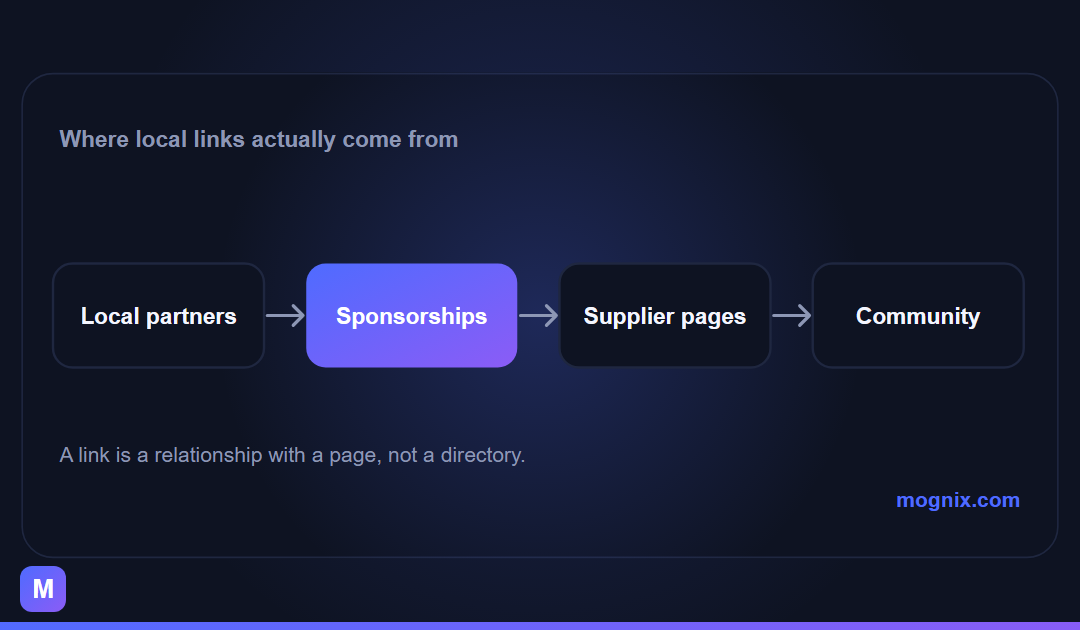
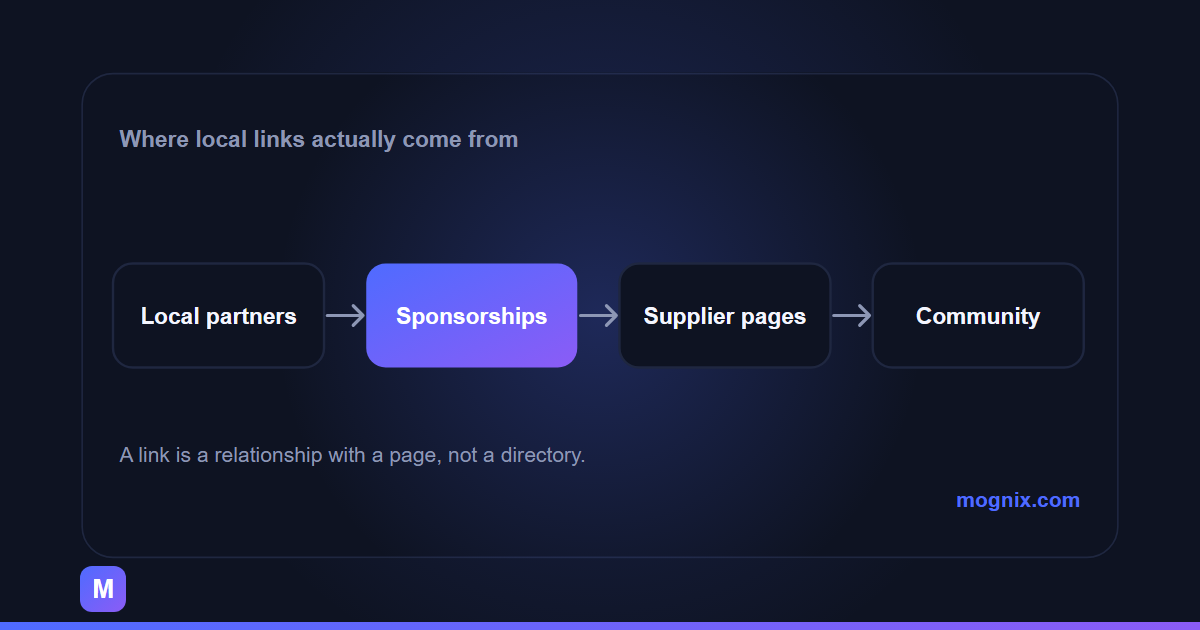
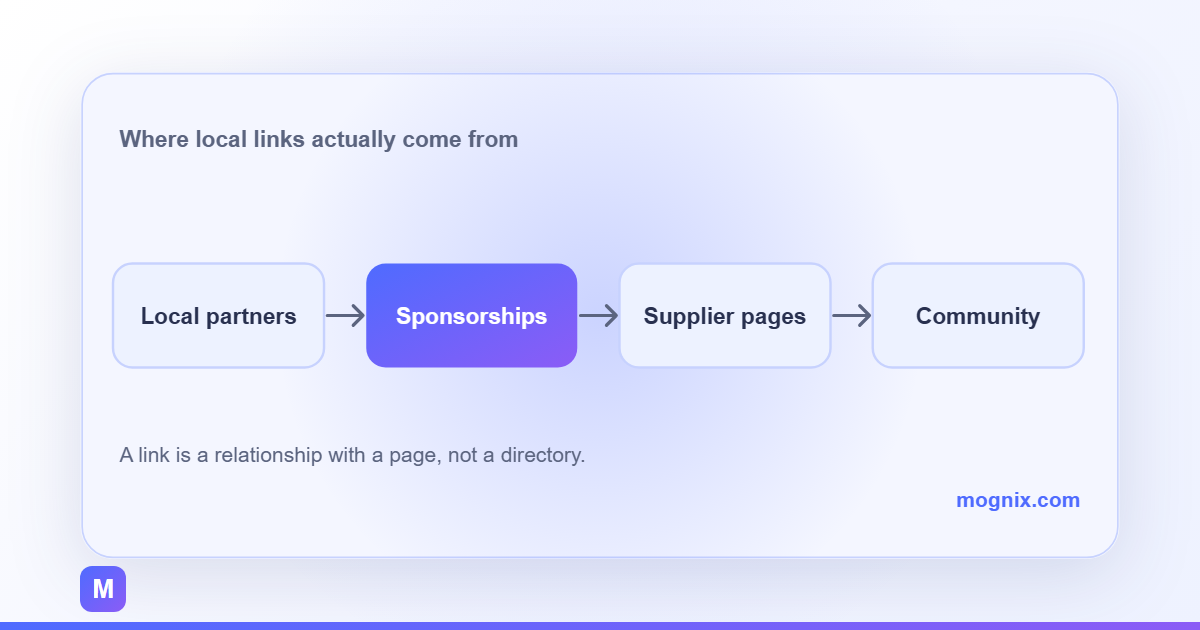
The four sources that carry weight
The first is a partner: a business that serves the same customer without competing. A wedding photographer and a florist, an accountant and a solicitor, a web designer and a printer. Each can list the other on a services or partners page, with a sentence explaining the relationship. These links are easy to justify because they are true.
The second is a supplier. Manufacturers and distributors often publish a “where to buy” or “approved installer” page, and getting onto it is a support request rather than a marketing campaign. The same applies to trade bodies, certification schemes and software vendors that list agencies.
The third is community involvement. Sponsoring a school team, a local run or a charity does not automatically produce a link, but the organisation’s website usually has a sponsors page. Ask for the logo to link to the relevant service page, not the homepage.
The fourth is local media. A neighbourhood paper, a city blog or a radio station will link when there is a story: a new premises, an award, a piece of advice for readers. The story has to be real, but local outlets are short of copy and unusually receptive to a useful quote.
What to ignore
Directories are not all worthless. The chamber of commerce, the local trade association and a handful of genuinely used industry directories are worth claiming. The hundreds of “top 10 businesses in Kolkata” sites that email every month are not. The test is simple: does the page have a reader who is not a business owner looking for a link? If the answer is no, the link is a footprint rather than an asset.
Paid links, link exchanges at scale and guest posts with a mandatory anchor are all against Google’s link spam policies. The risk is not a manual penalty in most cases; it is that the links simply stop counting. Spending the same effort on three real relationships is a better trade.
Local link building is relationship work, not outreach
The reason most local link building never happens is that the ask feels like begging. It is not, if the request is specific and the other side gets something. A partner page link is mutual visibility. A supplier listing helps the supplier’s customer find an installer. A sponsorship link is part of what the sponsorship buys.
Start with people who already know you
List every business the company has worked with in the last year: suppliers, subcontractors, clients who are happy to be named, professional advisers, the landlord, the printer. Then list the organisations it already pays: the trade body, the software subscription, the local sports club. Each of those has a page where the relationship could be listed.
Write one short email per relationship. Name the page, explain what the business does in one sentence, and offer a reciprocal mention where it is honest. Do not send a template with the business name swapped; the recipients know each other and they talk.
Give something before the link
The easiest link to earn is a useful contribution. Offer a quote for an article the local paper is already writing. Run a free clinic at a community event and let the organiser publish the details. Write the explainer that a supplier can host on their resource page. The link follows the contribution because the publisher needs a source.
This is also the fastest way to build the kind of mention that does not need a link at all. A named quote in a local article is a brand mention, and search engines treat an unlinked mention as a signal of existence. The link is the bonus, not the only outcome.
Making links land on the right page
A link to the homepage is not useless, but it does not tell Google which service matters. When a link is about a specific service, point it at that service page. When it is about the business itself, the homepage is correct. The anchor text should describe what the reader will find, not repeat a keyword phrase.
Aim for a natural mix. Most links will carry the business name, some will say “the team at”, and a few will describe the service. A profile where every anchor is an exact-match keyword looks manufactured, because it is.
If the linking page is an image, ask for the logo to link to the service page and check that the alt text names the business. If the page is a sponsor list, that is often all you get, and it is enough.
What to measure
Rankings are slow and noisy; referral traffic and brand searches are faster. Track three numbers monthly: the number of referring domains that are locally relevant, the referral sessions those links send, and branded searches in Search Console. The first is the asset, the second proves the audience is real, and the third is the compounding effect.
Do not expect a jump from a single link. Ten good local links earned over a year will not beat a competitor with a stronger service page, but they will remove a ceiling. Links and content are not alternatives; the link makes the page eligible and the content makes it worth ranking.
A simple tracker is enough: the URL, the page it links to, the date it went live, the contact, and the next reason to speak to them. Review it quarterly. If a link disappears, ask why before assuming the worst; sites get redesigned and sponsor pages get rebuilt.
A realistic first month
Week one: build the list of fifty businesses and organisations the company already has a relationship with. Week two: send ten specific requests, starting with the three strongest relationships. Week three: offer one contribution to a local outlet or event, even if it produces no link. Week four: claim the chamber and trade-body listings and check that the supplier pages already list the business correctly.
That is the whole programme, and it repeats. It will not produce a hundred links, and it does not need to. For most local service businesses, twenty relevant domains is a strong profile, and the same twenty keep sending customers long after the campaign would have ended.
If the on-site half is not in order yet, start there: our SEO audit checklist puts the pages in the right order before you send a single outreach email. Our SEO services cover the link plan alongside the technical and content work, and if you want the current profile reviewed, request a free audit and we will tell you which links are doing nothing.