
The SEO versus Google Ads debate is usually framed as a quality question, as if one channel were honest and the other were a tax on impatience. That framing is not useful. Both channels put a business in front of someone who is searching for it, and both only work if the page they land on is worth the visit. What actually separates them is time and cash flow, and those are the constraints most businesses are really working with.


SEO vs Google Ads is a question about time, not quality
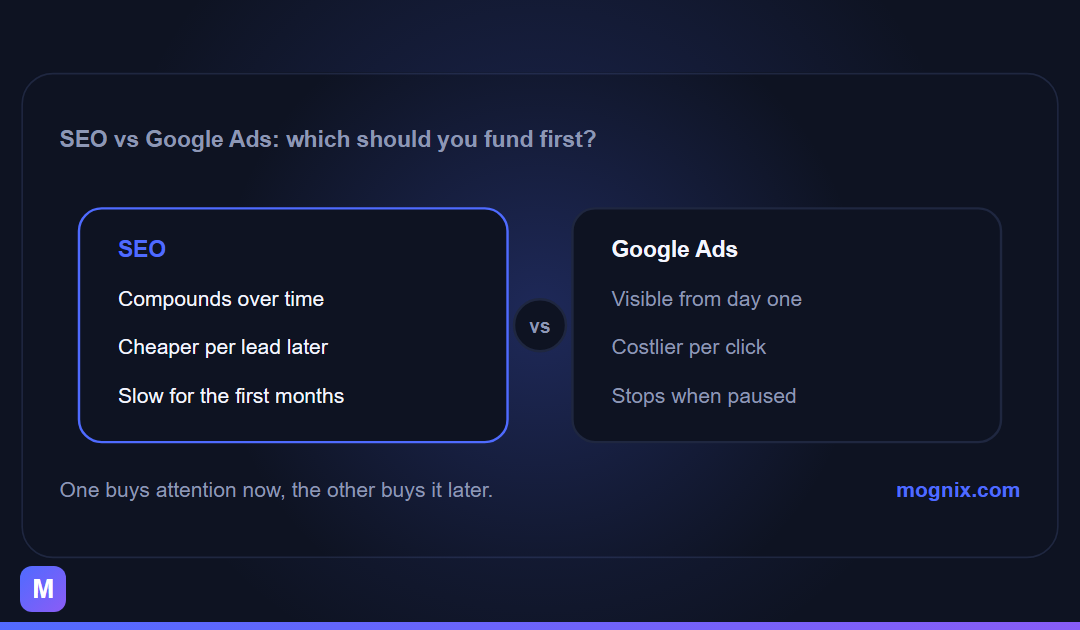
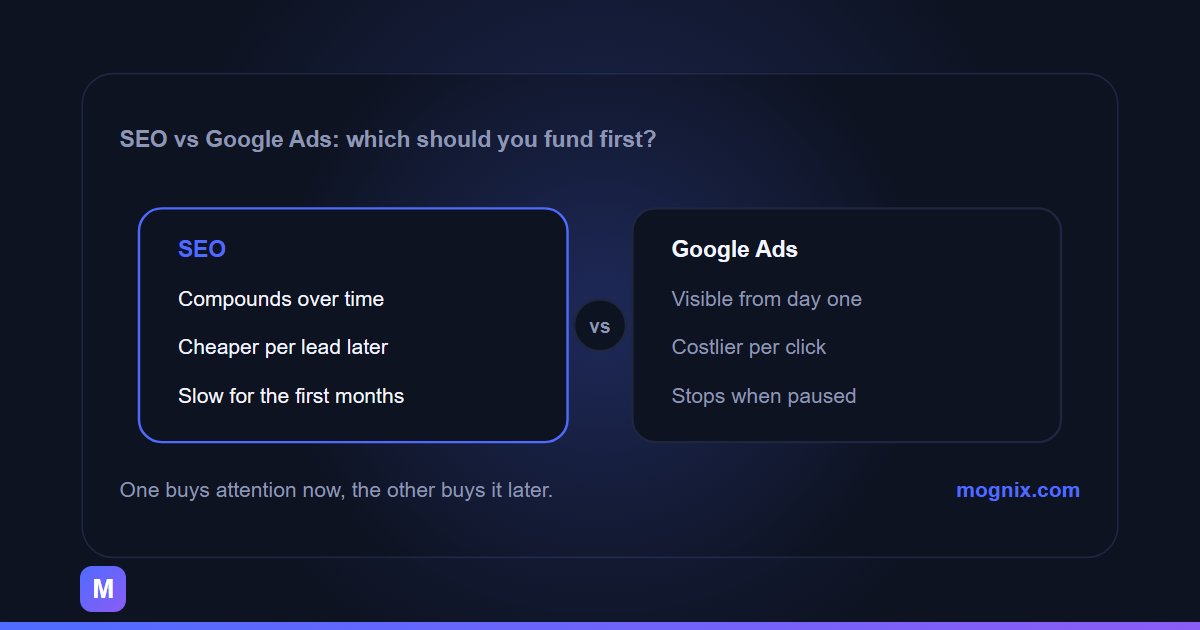
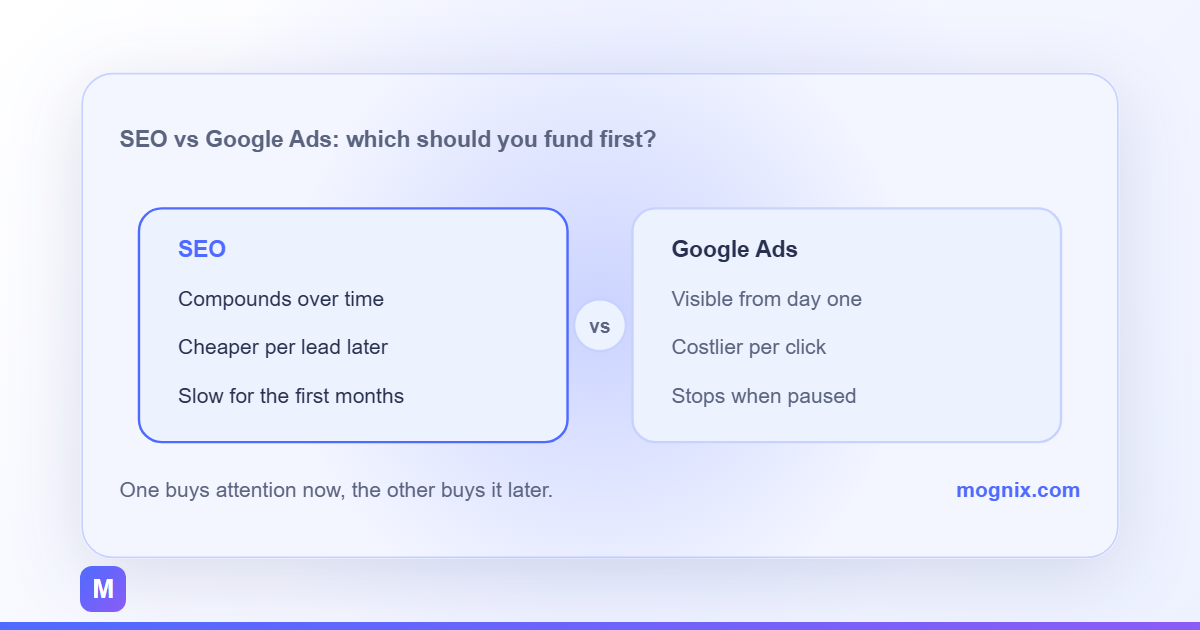
Search engine optimisation earns visibility that keeps arriving after the work is done. Google Ads rents visibility that stops the day the budget stops. Everything else follows from that single difference.
What SEO actually costs and returns
SEO is front-loaded. The first three to six months are mostly diagnosis and repair: fixing crawl problems, rewriting pages that answer the wrong questions, building the internal links that tell Google which pages matter, and publishing enough content to be credible on a topic. Results usually arrive late and then compound, which means a page written this year can still be producing enquiries in three years.
That shape is wonderful for a business with time and terrible for a business that needs the phone to ring this month. It also has a specific failure mode worth naming: SEO spend is easy to disappear into activity. Rankings, impressions and average position all improve while enquiries stay flat, because the pages rank for queries that nobody with money types.
What Google Ads actually costs and returns
Google Ads is pay-as-you-go visibility, and its great advantage is not cheapness but speed and legibility. You can be in front of buyers this afternoon, see the cost per enquiry this week, and shut down a losing campaign without losing anything but the spend.
The catch is that the cost per click in most commercial categories reflects how valuable that click is, so the channel is only viable when a customer is worth a lot more than a click. A business with a 30,000 rupee job and a 2,000 rupee customer value can make almost any click profitable. A business with a 3,000 rupee job and a 300 rupee value cannot, no matter how well the account is managed.
Choose by the shape of the demand you need
The decision gets much easier once the question changes from which channel is better to which kind of demand the business needs to serve first.
Urgent demand: ads first
If the business is new, has a seasonal window, has a competitor outranking it on a name nobody searches for it, or simply needs revenue this quarter, paid search is the rational first move. It produces information as well as enquiries: which phrases convert, which offers get clicked, and what a lead is genuinely worth. That information is worth the money even when the campaign itself only breaks even.
Durable demand: search first
If the business is already booking work and wants to lower its cost per enquiry over time, SEO is the better allocation. Paid traffic that is profitable forever is still traffic you pay for forever, and the businesses with the lowest acquisition costs are usually the ones that stopped renting attention for their main category and started owning it.
The threshold most businesses actually care about is this: at some point, the number of enquiries a page generates in a month is worth more than the cost of the page. Everything after that point is margin that a paid-only strategy never reaches.
Running both is not a compromise, it is a shortcut
The two channels are usually presented as rivals for one budget. In practice they make each other cheaper, and the sequencing is what matters.
Ads tell you what to write for SEO
A paid campaign is the fastest keyword research available. Run a small budget across the queries you think matter, and the search terms report will show which phrases people actually use, which ones convert, and which ones are research rather than intent. Those are the pages worth writing, and the ones you would otherwise have guessed at.
The reverse also holds. The pages that earn organic traffic tell you which promises resonate, and those headlines make better ads.
The same landing page serves both
One well-built page can receive a paid click and an organic one, which means the cost of improving it is shared across both channels. A page that lifts conversion from two per cent to four per cent halves the cost per lead on paid traffic and doubles the output of every organic visit. That is often a better use of a month’s budget than either channel.
Google’s own documentation on how Search works is worth an hour if you want to understand what the organic side is actually optimising for, and it becomes obvious why a page built for a human converts for both.
What a limited budget should actually do
For most small businesses in Kolkata, the practical split looks like this. Start with a modest paid search budget, enough to produce twenty or thirty enquiries in a month, and be disciplined about tracking the source of every one. Fix the page the traffic lands on before increasing spend, because paying more for traffic to a page that converts poorly is the fastest way to conclude that advertising does not work.
Then take the phrases that converted and write the pages that answer them properly. That work is slow and it does not replace the ads immediately. Within two quarters the organic pages usually start carrying a share of the enquiries, and the paid budget can be narrowed to the categories where it still wins.
What that avoids is the mistake that costs the most: choosing a channel based on what a competitor appears to be doing, then judging it after six weeks. SEO judged after six weeks always looks like a waste, and ads judged after one month of unqualified traffic always look like a scam.
Our SEO services handle the compounding side, our Google Ads services run the paid side with conversion tracking in place before spend begins, and the marketing not bringing leads guide covers what to check when either channel looks busy but quiet. If you want a straight answer about which one your business should fund first, request a free audit and we will tell you what we would change.